
Osteoporosis, often referred to as the “silent disease”, affects millions of people worldwide and is categorised by decreasing bone density and increasing risk of fractures. Overtime, osteoporosis has posed significant challenges in early diagnosis, prevention, and effective management.
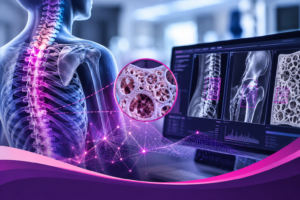
However, today the landscape is shifting dramatically. Thanks to advances in artificial intelligence (AI) and wearable technology, osteoporosis patients can experience improved support in factors such as early detection and personalised treatment plans, through to enhanced mobility and greater safety in daily life. AI offers predictive analytics and diagnostic precision previously unattainable through traditional methods.
The beauty of Artificial Intelligence (AI)
By incorporating a wide range of data, including: genetic factors, medical history, lifestyle behaviours, and imaging results – AI models can predict not only risk for osteoporosis, but when and where fractures are most likely to occur.
These insights help physicians craft personalised treatment plans. Rather than relying on generalised medication regimens, clinicians can target therapies to individual patient profiles, enhancing both efficacy and safety. AI can also monitor the effectiveness of prescribed treatments over time and recommend adjustments as needed.
Wearable technology: a safety net for daily living
- While AI drives revolutionary advancements in diagnostics and planning, wearable technology is making day-to-day life safer and more manageable for osteoporosis patients. Because falls are a major concern for people with reduced bone density (even minor slips can result in serious fractures), wearables play a crucial role in prevention, monitoring, and rehabilitation.
- Today, modern wearables equipped with accelerometers, gyroscopes, and motion sensors, can detect abnormal movement patterns or balance issues in real time. Devices like smartwatches, motion-tracking belts, and shoe inserts can monitor a user’s gait and posture continuously. When instability is detected, the device can issue alerts or even contact emergency services automatically in the event of a fall.
- Some smart wearables go further by using predictive analytics to warn users about potential hazards before they occur. For instance, if a person begins walking unevenly due to fatigue or a minor injury, the system can suggest resting or using support before a fall becomes imminent.
Real-Time feedback for posture and movement
- Proper posture and body mechanics are critical for individuals with osteoporosis, as poor alignment can increase the risk of spinal fractures. Wearable posture correctors are now available that use vibration feedback to prompt users to adjust their stance in real time. These devices encourage safer movement habits, especially during activities like bending, lifting, or walking.
- Smart clothing embedded with sensors can also provide biomechanical data that helps patients and physical therapists assess mobility issues. This information is especially useful during rehabilitation after a fracture, allowing patients to rebuild strength without risking further injury.
Monitoring the medication
Medication adherence is another key challenge in osteoporosis care, especially among older adults who may be managing multiple prescriptions. Wearables can integrate with medication reminders, sending alerts when it’s time to take a dose or refill a prescription.
Smart devices also monitor vital health indicators such as heart rate, sleep quality, and activity levels. This holistic view of a patient’s health enables providers to intervene early when lifestyle changes or medication adjustments are needed.
Integrating AI and Wearables: a holistic approach
- The true potential of these technologies lies in their integration. When AI and wearable technology work together, they form a comprehensive ecosystem of care. Data is submitted and cross-referenced with bone density trends, flagging a possible increase in fracture risk. The system alerts the patient and physician, prompting a check-up and adjustments to treatment or lifestyle.
- This proactive, closed-loop approach can prevent injuries and significantly enhance quality of life. In this way, patients can undergo continuous assessment without frequent visits to the clinic, reducing the burden on healthcare facilities and making osteoporosis management more accessible for all.
Taking control through advancing technology
Osteoporosis is no longer a condition to be quietly endured. Thanks to breakthroughs in AI and wearable technology, patients now have access to tools that empower them to take control of their health. Early detection, personalised care, real-time monitoring, and fall prevention are transforming osteoporosis management from reactive to proactive. As these technologies become more widespread and accessible, the outlook for millions of osteoporosis patients around the world is growing brighter – one innovation at a time.
NOFSA (National Osteoporosis Foundation South Africa)
NOFSA is the only non-profit, voluntary health organisation dedicated to promoting lifelong bone health. We focus on reducing the widespread prevalence of osteoporosis while working to find a cure for the disease, and by supporting research and developing programmes of education and advocacy.
Find out more about our work at: www.osteoporosis.org.za