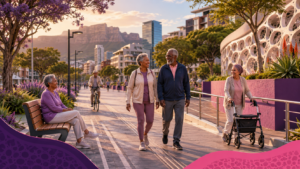
The world is ageing faster than ever before. By 2030, one in six people globally will be aged 60 years or older, and by 2050 that number is expected to double. In response to this demographic shift, the World Health Organization (WHO) declared 2021–2030 the Decade of Healthy Ageing — a global call to action to improve the lives of older people, their families, and the communities in which they live.
At NOFSA (National Osteoporosis Foundation of South Africa), we believe bone health sits at the very heart of this vision. Healthy ageing is not just about living longer — it’s about living well, with strength, independence, dignity, and mobility. And that begins with strong bones.
What Is the Decade of Healthy Ageing?
According to the WHO, healthy ageing is defined as “the process of developing and maintaining the functional ability that enables wellbeing in older age.”
Functional ability includes:
- The ability to move independently
- The ability to meet basic needs
- The capacity to learn, grow, and make decisions
- The ability to build and maintain relationships
- The opportunity to contribute meaningfully to society
The Decade of Healthy Ageing focuses on four interconnected action areas:
- Changing how we think, feel, and act towards ageing
- Ensuring communities foster the abilities of older people
- Delivering person-centred, integrated care
- Providing access to long-term care when needed
Bone health — often overlooked until a fracture occurs — directly influences every one of these pillars.
Why Bone Health Is Central to Healthy Ageing
Bones are the framework that allows us to move, live independently, and remain active. As we age, bone density naturally decreases — but for millions of people, this loss becomes excessive, leading to osteoporosis, a condition that causes bones to become fragile and more likely to break.
The Hidden Impact of Osteoporosis
Osteoporosis is often called the “silent disease” because bone loss occurs without symptoms — until a fracture happens. Hip, spine, and wrist fractures can have devastating consequences, including:
- Loss of independence
- Reduced mobility
- Chronic pain
- Increased risk of disability
- Higher mortality after hip fractures
A single fracture can dramatically change an older person’s quality of life, undermining the very goals of the Decade of Healthy Ageing.
Fracture Prevention = Independence Preservation
One of the strongest predictors of healthy ageing is the ability to stay mobile and independent. Good bone and muscle health:
- Reduces the risk of falls and fractures
- Supports balance, posture, and strength
- Enables continued participation in work, family, and community life
- Helps older adults remain active for longer
Preventing osteoporosis-related fractures isn’t just a medical issue — it’s a social, emotional, and economic one. Strong bones help people remain engaged, confident, and connected.
It’s Never Too Early — or Too Late — to Protect Your Bones
A key message of the Decade of Healthy Ageing is that action across the entire life course matters. Bone health is built (and lost) over time.
Bone-Healthy Habits That Support Healthy Ageing
- Nutrition: Adequate calcium, vitamin D, protein, and micronutrients
- Movement: Regular weight-bearing and muscle-strengthening exercise
- Lifestyle: Avoid smoking, limit alcohol, manage chronic conditions
- Screening: Bone density testing for those at risk
- Awareness: Understanding personal risk factors such as menopause, family history, or long-term medication use
These actions don’t just prevent disease — they preserve freedom.
Osteoporosis Awareness Aligns with WHO’s Vision
The WHO’s Decade of Healthy Ageing calls for prevention-focused, person-centred care — exactly what osteoporosis awareness and early intervention provide. By identifying risk early, educating communities, and empowering individuals, we can:
- Reduce avoidable fractures
- Lower healthcare costs
- Improve quality of life
- Support ageing with confidence, not fear
At NOFSA, we advocate for bone health as a foundation of healthy ageing, not an afterthought.
Healthy Ageing Starts from the Inside Out
Ageing well is not about avoiding age — it’s about ageing with strength, resilience, and purpose. Strong bones support strong lives.
As we move through the WHO Decade of Healthy Ageing, let’s ensure bone health and osteoporosis prevention are part of every conversation about ageing — in families, communities, healthcare systems, and policy decisions.
Because healthy ageing isn’t just about adding years to life —
It’s about adding life to years.
NOFSA is committed to raising awareness, promoting prevention, and supporting South Africans in building stronger bones for a stronger future.