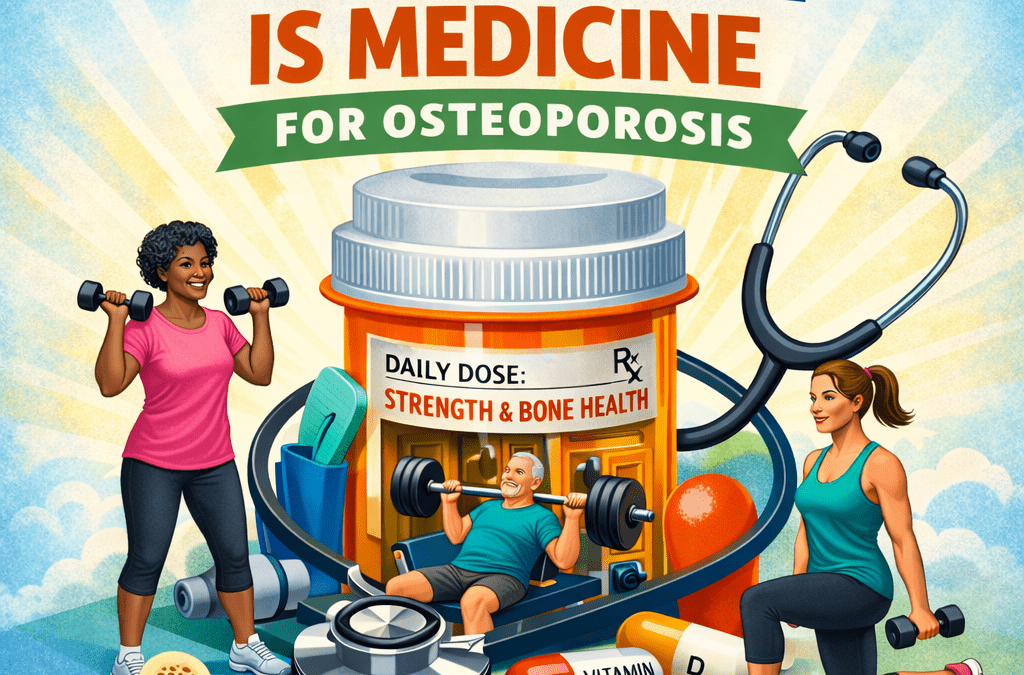
When we hear the phrase “exercise is medicine,” we often think about heart health, weight management, or stress relief. But one of the most powerful — and often overlooked — benefits of exercise is its role in protecting and strengthening our bones. For individuals concerned about osteoporosis, fracture risk, or healthy ageing, movement is not optional. It is essential.
Bones Are Living Tissue
Many people think of bones as static structures — solid and unchanging. In reality, bones are living tissue that constantly remodels itself. Old bone is broken down, and new bone is formed.
This process is influenced by many factors, including:
• Nutrition
• Hormones
• Age
• Medical conditions
• And importantly, mechanical stress from movement
When we move, especially in ways that challenge our muscles and skeleton, we stimulate bone formation. Without movement, bone density declines more rapidly.
How Exercise Strengthens Bones
Not all exercise affects bone health in the same way. The most beneficial forms include:
1. Weight-Bearing Exercise
These are activities where you move against gravity while staying upright. Examples include:
• Walking
• Stair climbing
• Dancing
• Hiking
• Low-impact aerobics
These movements send signals to the bones that they need to remain strong to support the body.
2. Muscle-Strengthening Exercise
Resistance-based exercises build muscle, and strong muscles place healthy stress on bones, encouraging them to maintain density. Examples include:
• Resistance bands
• Bodyweight exercises (e.g., squats, lunges)
• Light free weights
• Supervised strength training
Muscle strength is particularly important because it supports balance, posture, and joint stability.
3. Balance and Stability Training
While balance exercises may not directly increase bone density, they are crucial in reducing falls — one of the leading causes of fractures in older adults.
Simple activities like:
• Heel-to-toe walking
• Standing on one leg
• Tai Chi can significantly improve stability and confidence.
Why Exercise Matters at Every Age
For Children and Teenagers
Peak bone mass is built during childhood and adolescence. Regular physical activity during these years creates a strong foundation for later life.
For Adults
Bone density naturally begins to decline with age. Regular exercise slows this loss and supports muscle preservation.
For Older Adults
Movement helps maintain independence. Strong muscles and bones reduce fracture risk, improve posture, and enhance overall quality of life.
It is never too early — and never too late — to start moving. Movement Preserves Independence. One of the strongest predictors of healthy ageing is the ability to remain mobile and independent.
Osteoporosis-related fractures are not just medical events. They can impact:
• Confidence
• Social participation
• Ability to work
• Emotional well-being
• Financial stability
Exercise plays a key role in preventing these life-altering outcomes.
Preventing fractures is not simply about avoiding injury — it is about preserving freedom.
If you:
• Have been diagnosed with osteoporosis
• Have had a previous fracture
• Have chronic health conditions
• Or are unsure where to begin
Consult your healthcare provider before starting a new exercise programme. Begin gradually. Consistency matters more than intensity.
Healthy ageing is built through daily habits, not drastic changes. Regular weight-bearing, strength, and balance exercises:
• Support bone density
• Reduce fall risk
• Improve muscle strength
• Enhance quality of life
Movement is one of the most powerful tools we have to protect our bones — and it is accessible to almost everyone. Start small. Stay consistent.
Your bones will thank you for years to come.